

GuideFeel, drape and care
The fabric glossary what each fabric is like
Every fabric you can choose for a made-to-order design: how it feels, how it moves, which Lolita and coquette styles it suits, and how to look after it.

On this page
Choosing a fabric
Three questions decide it: when will you wear it, how much volume do you want, and how much care will you give it? Crisp fabrics hold a shape; soft ones move; heavy ones keep you warm.
- Everyday and warm weather: cotton poplin, chiffon.
- Volume and occasions: organza, tulle, satin.
- Autumn and winter: velvet, wool blend.
The glossary
- Cotton poplin
- Smooth, crisp and breathable, with a fine ribbed weave. Holds a pleat and a ruffle well and softens with washing.
- Best for Day dresses, blouses and anything worn in warm weather.
- Styles Classic and sweet; the easiest fabric to wear every day.
- Care Cool machine wash or hand wash, warm iron.
- Chiffon
- Sheer, light and floaty. It moves with you rather than holding a shape, so it is usually layered or lined.
- Best for Sleeves, overlays, soft blouses and flowing skirts.
- Styles Coquette and softer sweet looks.
- Care Hand wash cold, hang to dry, cool iron through a cloth.
- Satin
- Glossy on one side, matte on the other, with a liquid drape and a soft sheen under light.
- Best for Bows, ribbons, linings and evening pieces.
- Styles Sweet for bows; gothic in black or deep red.
- Care Hand wash cold or dry clean; iron on the reverse, low heat.
- Wool blend
- Warm with a soft, dry hand and some body. The blend makes it lighter and easier to care for than pure wool.
- Best for Autumn and winter dresses, jumper skirts and capes.
- Styles Classic, especially in rich, muted colours.
- Care Dry clean or a gentle cold hand wash; dry flat.
- Velvet
- A short, dense pile that catches light and feels soft to touch. Heavier, with a rich drape.
- Best for Bodices, bows, trims and winter dresses.
- Styles Gothic and classic, and for winter sweet looks.
- Care Dry clean; steam rather than iron so the pile is not crushed.
- Organza
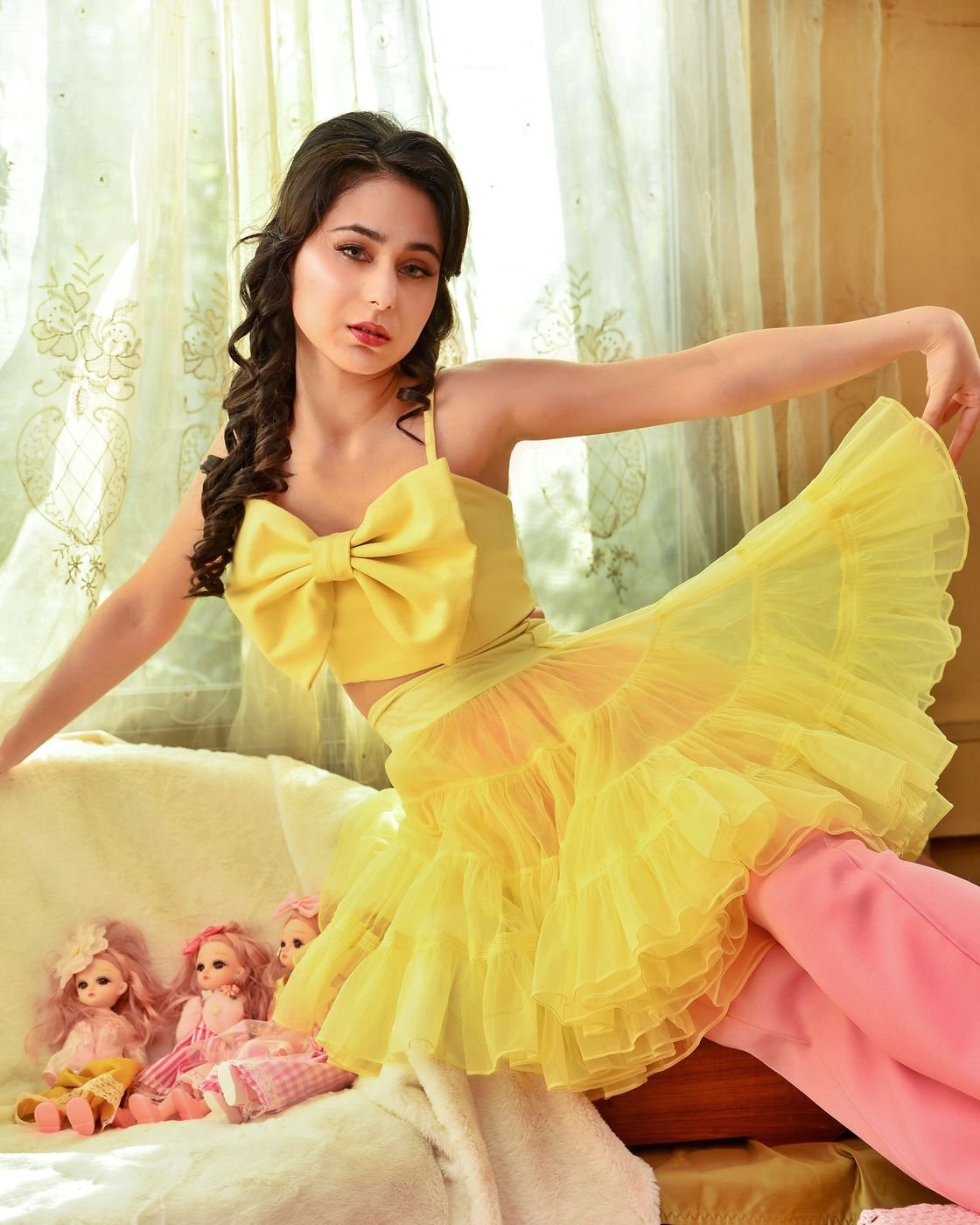
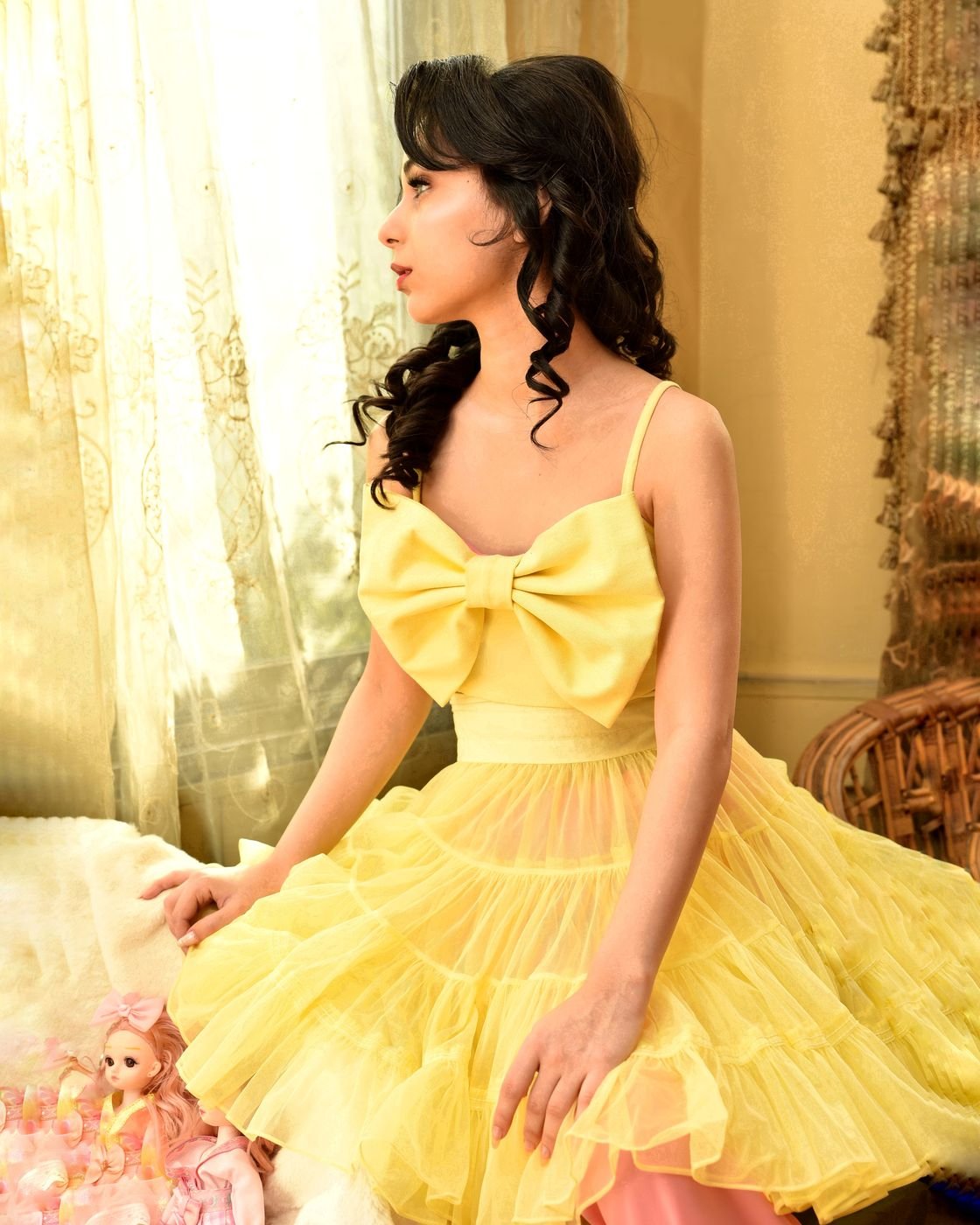
- Sheer like chiffon but crisp: it stands away from the body and holds volume. Slightly scratchy, so it is lined where it touches skin.
- Best for Full skirts, overlays, puffed sleeves and big bows.
- Styles Sweet and coquette, wherever you want volume.
- Care Hand wash cold, hang to dry, cool iron.
- Tulle
- A fine net, very light. Layers of it build cloud-like volume without weight.
- Best for Tiered skirts, petticoats and overlays.
- Styles Sweet and coquette.
- Care Hand wash cold; never iron directly, steam from a distance.
Organza vs chiffon
Both are sheer. Organza is crisp and stands away from the body, so it builds volume in skirts, sleeves and bows. Chiffon is soft and falls close to the body, so it suits overlays and flowing blouses. If you want the skirt to stand out, choose organza; if you want it to move, choose chiffon.
Questions, answered
Which fabric is best for a Lolita dress?
Cotton poplin for everyday wear; organza or tulle when you want a full, standing skirt; velvet or wool blend for winter.
Can I ask for a fabric that is not listed?
Ask before ordering. We will tell you honestly whether we can source it; for a completely new design, use the Dream Dress request.
Keep reading
Plain answers to the questions we get asked most, written by the people who cut the dresses.
-
-
-


Ready to have yours made?
Choose a design and set it to your size, fabric and colour — or describe the dress you have in mind and we will design it with you.